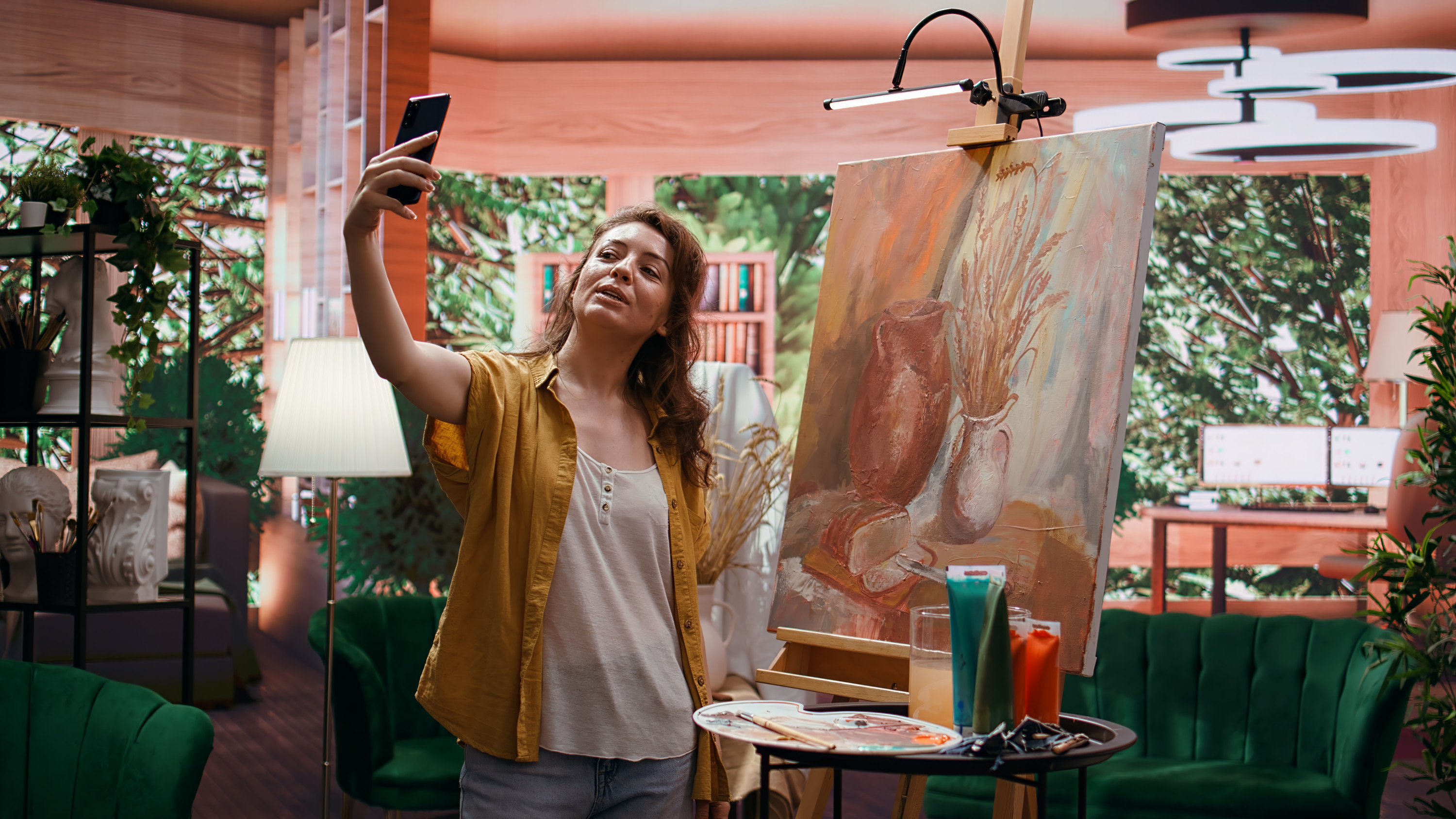
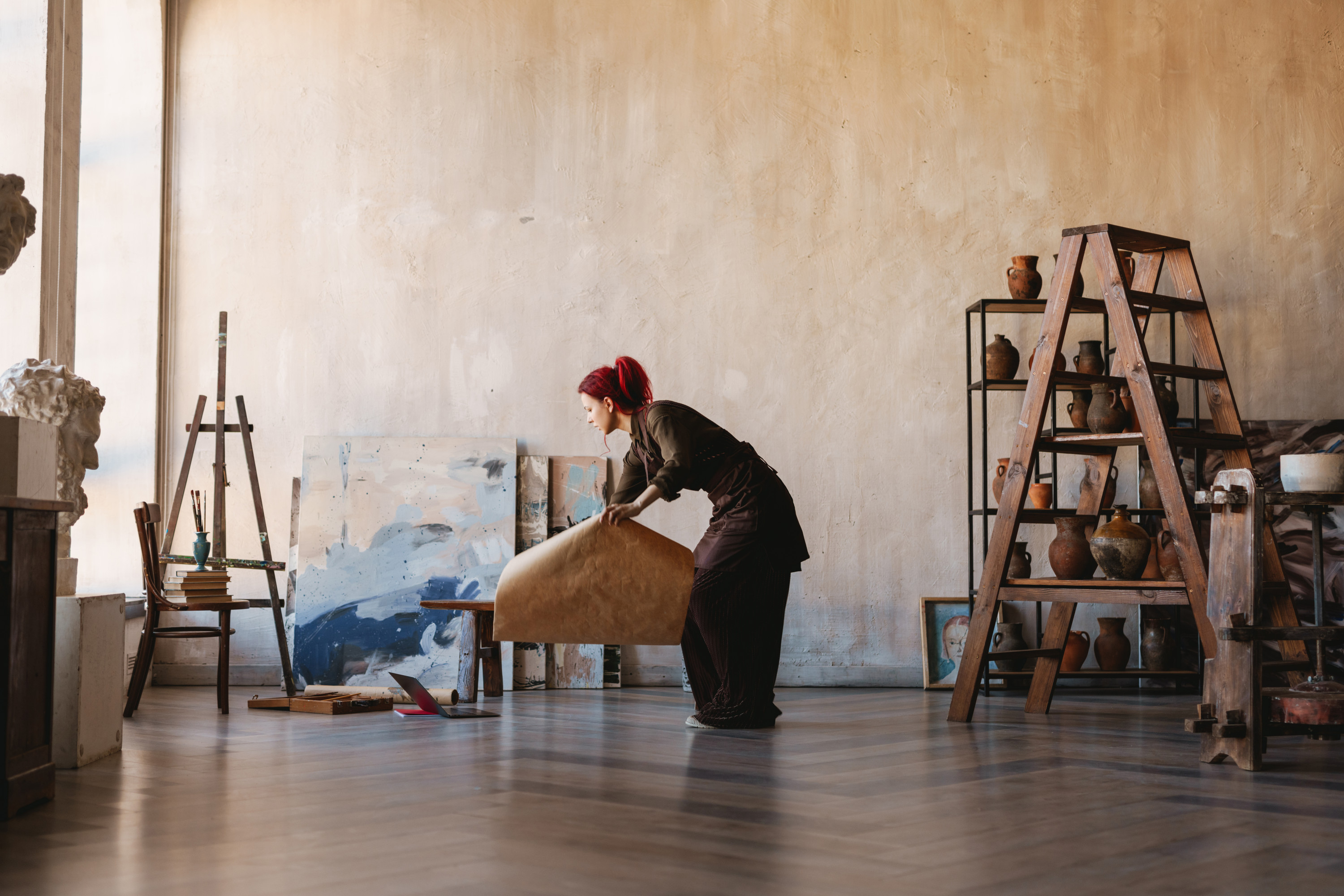
Good photographs are essential to your portfolio. Most people will encounter your work on a screen long before they ever stand in front of it. Curators, jurors, and collectors make decisions based on what they see in a digital file. We have watched excellent work get overlooked because the photo was dark, poorly framed, or distorted. Photographing your artwork is not a cosmetic extra. It is a professional responsibility.
Lighting is the most important factor. Use soft daylight whenever you can. Avoid direct sun, which creates harsh highlights and deep shadows. For paintings, two lights placed at forty five degrees from either side will remove most reflections. For sculpture, move the light until the form has definition. A neutral background lets the artwork speak. You are not photographing your studio. You are photographing your art.
Use a tripod or a solid surface. Shoot straight on. Fill the frame, but leave a small margin. Do not tilt the camera. After shooting, crop the image so that the edges are straight and clean. Adjust exposure and color balance only enough to match reality. The goal is not to make the work look different. The goal is to make it look accurate.
Take additional images. Detail shots show texture and craft. Installation shots show scale. Both are important for exhibitions, publications, and online presentation. In every submission we review, the artists who provide clear professional photographs immediately stand out. Good images communicate care, intention, and respect for the work and the viewer.
Name your files clearly. Include title, year, media, and size. This one habit will save you time with every catalogue, application, and sale. A well documented practice is easier to manage and easier to promote. Photographs do not create good art, but they allow good art to be seen. When your images look professional, the rest of your presentation follows naturally.
Happy photographing!